Best Submersible Sump Pumps (Buying Guide + Specs)
We compare top 1/3 HP and 1/2 HP submersible sump pumps for common residential basements, with specs and fit notes.
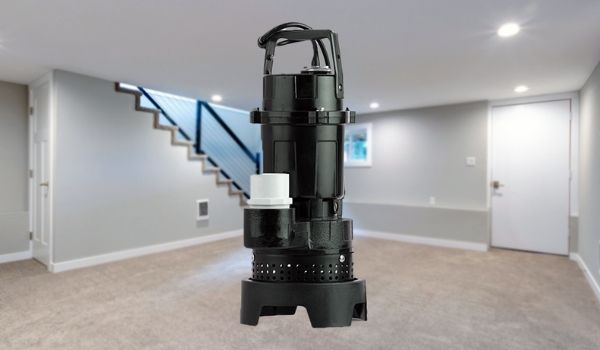
This guide is maintained by PumpingChops and may include affiliate links. We update recommendations when products, availability, or specs change.
Most homeowners choosing a submersible sump pump are really deciding between 1/3 HP and 1/2 HP, plus whether the pump and switch will fit the pit without short-cycling. The right choice depends on your actual water volume, discharge height, and basin dimensions, not just the highest advertised GPH.
This guide compares proven residential options by output at realistic lift, switch behavior, build quality, and installation fit for common basement setups. Use it to decide faster if you need a budget-friendly light-flooding pump, a balanced average-flooding pick, or a higher-output model for heavier inflow.
Submersible vs Pedestal Sump Pump Helper
Use one shared target for both sump pump styles. Compare outputs at the same head.
Plain terms: GPM is flow amount. TDH is total push resistance (lift + friction). Compare both options at the same GPM and TDH.
- Option A: CHECK
- Option B: CHECK
If one passes and one fails, choose the one that passes.
Pass rule: candidate output at target head must be at least target flow.
| Liberty 257 | Superior 92341 | Wayne CICDU800 |
|---|---|---|
|
Best for average flooding |
Best for light flooding |
Best for heavy flooding |
|
2250 GPH @ 10′ |
1800 GPH @ 10′ |
3840 GPH @ 10′ |
| 1/3 HP motor |
1/3 HP motor |
1/2 HP motor |
|
Pump type: Submersible |
Pump type: Submersible |
Pump type: Submersible |
|
Outlet size: 1-1/2″ |
Outlet size: 1-1/2″ |
Outlet size: 1-1/2″ |
| Editor Rating: 4.7 ★ | Editor Rating: 4.6 ★ | Editor Rating: 4.6 ★ |
Who this is for (and who it is not for)
This guide is for homeowners choosing a primary sump pump for a basement or pit that sees recurring groundwater or stormwater buildup. It is most useful if you are comparing common 1/3 HP and 1/2 HP submersible pumps and want to understand reliability, switch behavior, and overall value.
- Good fit for: homeowners replacing an aging sump pump, upgrading reliability, or comparing submersible pump options for standard residential basins.
- Not ideal for: sewage ejector applications, high-solids pumping, or specialized commercial pumping systems that require different pump types and specifications.
How we chose these submersible sump pumps
This roundup is research-backed and spec-verified. We compared products using manufacturer specifications, product documentation, installation requirements, and practical selection criteria that matter in real residential use.
We focused on build quality, switch reliability, performance, and installation fit. Editor Rating values summarize this comparison framework and are intended as a quick relative signal, not a lab-test score.
Quick picks
Use the comparison table first, then the per-product Best for / Avoid if / Tradeoff notes below to choose faster.
The Best Submersible Sump Pumps
1. Liberty 257
The best for most homes with average flooding
- Capacity2250 GPH at 10′ lift
- Motor1/3 HP
- SwitchVertical type (3″)
- HousingCast iron
- Solids1/2″
- Discharge1-1/2″
- Minimum basin10″
- Works well even in narrow basins
- Great quality switch that doesn’t stick
- High-end bearings for super quiet operation
- Short on-and-off range
The Liberty 257 packs the best set of features when it comes to pumps for homes with an average amount of flooding. Everything about it — from the energy-saving motor, quiet operation, and leak-resistant body — speaks of its quality. It’s a pump that does almost everything right.
The only weakness is the short switch range that makes the pump start and stop more often. This can be a real problem for most pumps. But Liberty made adjustments by using better bearings, a more efficient motor, and a cast iron housing to keep the motor cool. Giving the pump a couple more years compared to your average pump. Now if you combine that with its great build quality and affordable price, you have a strong all-around option for many residential sump pits. It’s easily the best pump for most homes.
Decision summary
Best for: Average basement flooding where you want a durable 1/3 HP primary pump.
Avoid if: You regularly see heavier inflow that needs 1/2 HP class output.
Why we picked it: It balances reliability, quiet operation, and practical fit for typical residential pits.
Tradeoff: The short switch range can cycle more often than some alternatives.
2. Superior Pump 92341
The best for light flooding
- Capacity1800 GPH at 10′ lift
- Motor1/3 HP
- SwitchVertical type (4″)
- HousingCast iron
- Solids3/8″
- Discharge1-1/2″
- Minimum basin14″
- Perfect capacity for light flooding
- Heavy duty quality to last through the years
- Very affordable
When you have a light amount of water coming into the basement, you don’t need a powerful pump. What you need instead is a pump that saves you money now and in the long run without putting your basement at risk. The Superior 92341 is a durable 1/3 HP submersible sump pump that stays affordable while covering light-flooding needs. It’s best for people with basements that have a small amount of water coming in.
Decision summary
Best for: Light flooding setups that need an affordable 1/3 HP pump with vertical switch control.
Avoid if: Your basin regularly takes heavy inflow or rapid refill cycles.
Why we picked it: It is one of the better low-cost options when your demand profile is moderate.
Tradeoff: Lower output headroom than heavier-duty models in this list.
3. Wayne CICDU800
The best for heavy flooding
- Capacity3840 GPH at 10′ lift
- Motor1/2 HP
- SwitchVertical type (5″)
- HousingCast iron
- SolidsNo
- Discharge1-1/2″
- Minimum basin11″ (larger is recommended)
- Pumps water out fast
- Float switch design intended for consistent cycling
- Premium construction materials
- Can be too powerful if installed incorrectly
Wayne CICDU800 offers a great performing pump at a price that’s hard to beat. Equipped with a 1/2 HP motor, it puts out up to 3840 GPH of water at 10 feet. Perfect for basements with some serious amounts of water coming in.
This is a top of the line Wayne pump with cast iron construction for extra durability. A workhorse that can take a beating even in the toughest environments, with a float switch design intended for consistent cycling when properly installed and maintained. It is a strong performer in many residential heavy-flooding setups.
Its only weakness is its own power. This is a strong pump, and when people install it in a 5-gallon basin, it will destroy itself. Give it enough space though and you have one formidable pump at your disposal for years.
Decision summary
Best for: Heavier residential flooding where faster drawdown matters.
Avoid if: You have a very small pit or want a lower-powered light-duty setup.
Why we picked it: Its 1/2 HP class performance and build quality make it a strong heavy-inflow pick.
Tradeoff: Needs proper basin sizing and installation to avoid excessive cycling wear.
4. Zoeller M53
The best track record
- Capacity2040 GPH at 10′ lift
- Motor1/3 HP
- SwitchVertical type (4.25″)
- HousingCast iron
- Solids0.5″
- Discharge1-1/2″
- Minimum basin18″
- Durable cast-iron construction
- Perfect capacity for most homes
- Long track record in residential sump pump installations
- High current draw
- Switch can be better
If you want a pump that’s been trusted by both professionals and homeowners for decades, this is it. With a body that’s built for durability, the Zoeller M53 has been a staple in many homes for decades now. Thanks to its incredible durability, it has stood the test of time with flying colors.
But it’s in need of an upgrade. The motor draws too much power for its output and quite a few people have had problems with the switch. And while it’s still deserving of a place at the top, other brands are slowly catching up. If you’re looking for the best when it comes to stability, however, it’s hard to beat a Zoeller.
Decision summary
Best for: Homeowners who prioritize long-term track record and proven residential reliability.
Avoid if: You want lower current draw or newer switch designs at the same output class.
Why we picked it: The M53 remains a benchmark model with strong field history.
Tradeoff: It can be less efficient and less refined than newer alternatives.
5. Zoeller M63
The M53 upgrade that’s built for durability
- Capacity2040 GPH at 10′ lift
- Motor1/3 HP
- SwitchVertical type (4.25″)
- HousingCast iron
- Solids0.5″
- Discharge1-1/2″
- Minimum basin18″
- Even better durability than the M53
- Improved switch that doesn’t stick
- Perfect capacity for most homes
- A bit more expensive
- Still the same high current draw
The Zoeller M63 is the premium version of the M53. It’s made with an all cast iron construction for that extra protection against the elements. All the great features of the M53 are packed with it and on top of that — it’s equipped with a much better float switch.
The cast iron float switch makes the M63 an all-around beast that guards your house from intruding flood every single day of the year. It’s a bit pricier but what it offers is a long-term reliability when sized and maintained correctly. If you want a heavy duty machine with fewer compromises, upgrading your pump to an M63 is an option worth considering.
Decision summary
Best for: Buyers who want a heavier-duty Zoeller option than the M53 with upgraded switch construction.
Avoid if: Budget is tight and you do not need premium build upgrades.
Why we picked it: It improves on M53 durability patterns while keeping the same fit class for many pits.
Tradeoff: Higher upfront cost without higher nominal output.
6. Wayne CDU790
Best budget alternative for average flooding
- Capacity3060 GPH at 10′ lift
- Motor1/3 HP
- SwitchVertical type (5″)
- HousingCoated steel
- SolidsNo
- Discharge1-1/2″
- Minimum basin11″
- No air lock
- Very affordable
- Works well even in narrow basins
- Coated steel may rust when coating is lost
This is easily the best pump you can get if you’re on a budget. An efficient and reliable pump packed with decent features for a fraction of the price.
Wayne is known for their powerful yet affordable pumps that can last as long as the best of them. The CDU790 is a powerful pump that can move 3060 gallons per hour at 10 feet while drawing only 3.65 amps, making it a strong budget option among the 1/3 HP picks on this list.
Its vertical switch has more range than average at 5 inches allowing for longer cycles that will definitely help with the life of the pump.
This is perfect to avoid overheating from frequent on and off especially since it can be used in small 11-inch basins which get filled and emptied faster.
One unique advantage for Wayne pumps is that you won’t need to drill a hole at the discharge of the pump. Thanks to its top suction design, you’re virtually free from any air lock issues that’s present in other pumps.
You don’t often see a budget pump that can seriously contend with the best and the Wayne CDU790 is a perfect example of that.
Decision summary
Best for: Budget-conscious average-flooding setups that still need vertical-switch basin compatibility.
Avoid if: You need cast-iron durability as a hard requirement.
Why we picked it: It delivers solid output per dollar in common residential use cases.
Tradeoff: Coated steel body may demand more corrosion vigilance over time.
7. Liberty 287
Best alternative for heavy flooding
- Capacity3300 GPH at 10′ lift
- Motor1/2 HP
- SwitchVertical type (5.5″)
- HousingCast iron
- Solids3/4″
- Discharge1-1/2″
- Minimum basin10″ (larger is recommended)
- Ample switch range
- High capacity pump for fast pumping
- Can handle larger solids
- No major flaws
The Liberty 287 brings a solid and well-rounded set of features that makes it shine from the rest of ½ HP sump pumps. With an impressive ¾ inch solid handling capacity it’s a tough one to beat especially when you add in all the other advantages it offers.
The motor is rated for continuous duty and has a capacity of 3300 gallons per hour up to 10 feet for only 8 amperes. It’s equipped with upper and lower ball bearings that can make the motor extra stable which also helps keep it running as quietly as possible.
Just like its ⅓ HP version, the Liberty 257, it has a one piece body that removes the need for a seal at the lower part of the motor allowing it to have less openings where the water may get inside.
Although it’s compact enough to run even in 10 inch basins, I would recommend using it in a larger one as it’s really powerful and may clear out the water too fast — resulting in improper cool down of the motor from the water.
Overall, the Liberty 287 is a solid ½ HP pump that can get you years of reliable service and peace of mind.
Decision summary
Best for: Buyers who want a higher-capacity Liberty alternative to 1/3 HP light-duty picks.
Avoid if: Your basin and cycle profile are better matched to lower-output pumps.
Why we picked it: It gives a stronger Liberty option when you need more headroom than entry picks.
Tradeoff: Higher output can mean more frequent cycling risk in undersized pits.
8. Wayne CDU800
Best budget alternative for heavy flooding
- Capacity3840 at 10′ lift
- Motor1/2 HP
- SwitchVertical type (5″)
- HousingCoated steel
- Solids3/4″
- Discharge1-1/2″
- Minimum basin10″ (larger is recommended)
- No airlock
- Very affordable
- Dependable float switch
- Coated steel may rust when coating is lost
The Wayne CDU800 is a 1/2 HP budget sump pump. It offers the same set of features as the CICDU800 but with different materials.
This pump uses a coated steel housing which is slightly inferior to cast iron when it comes to Corrosion. Although steel is tougher, for a sump pump, corrosion resistance is more important.
Nevertheless, you’re looking at a pump that can give you a very high value for a very low price. And although I usually recommend to always get the best sump pump to keep your home safe — the Wayne CDU800 will do you just fine.
Decision summary
Best for: Homeowners who want 1/2 HP class performance at a more value-oriented price point.
Avoid if: You prefer premium build materials over cost/performance balance.
Why we picked it: It is a practical high-output alternative in the Wayne lineup.
Tradeoff: Feature set and materials are less premium than top-end heavy-duty picks.
How to pick the perfect submersible sump pump
1. Build Quality
Is it built to last?
We want a pump that’s made with the best quality and materials. For a submersible sump pump, this would mean it can stand against wear and tear, high water temperatures, and corrosion.
The housing must remain strong and rust-free to prevent water from getting in while allowing the heat to go out. Its impeller and the shaft that holds it must also be strong enough to not break or erode easily in case of debris.
As with the pump, the motor must also be reliable and high quality. It, along with the power cord, must be ‘UL listed’ which means it’s been certified for safety and reliability.
The float switch’s ball should be buoyant and resistant to punctures to keep an accurate reading of the water level at all times. The whole switch assembly must be resistant to rust and dirt accumulation.
Most importantly, everything should stay perfectly in place for as long as we need them.
2. Features
Does it have what it takes to do the job better?
You need a pump that you know you can count on every single time. If you want to sleep soundly even during stormy nights, you need to have a pump with the right features.
Let’s look at the switch first. It’s one of the most sensitive parts of the pump and is very likely to fail first. And so, we need to consider a few factors in determining how good it is.
Is it reliable even after a few years of use? How much is the distance between the on and off points set by the switch? Can you adjust it to fit your needs? Will it work well on any basin and is there a backup if it doesn’t?
Another important feature is a non-clogging impeller which allows larger solids to pass through. Clogs can prevent the pump from sucking any water and can even damage the motor. Although these pumps really shouldn’t be handling solids, we want to know if they can just in case they need to.
Next in the list is the motor. We like a motor that’s rated for continuous use which means it can run non-stop without a problem.
It should have a thermal overload protection which cuts the power when it gets too hot for some reason and an automatic reset which starts it again when it’s cooled. Since a few degrees above the standard limit can greatly reduce motor life, this is an important feature the pump shouldn’t live without.
If it has properly lubricated bearings that enable a more stable operation and lower noise levels, then that’s even better. These bearings help keep the motor cool by reducing friction between parts.
3. Performance
How well does it do the job?
We want a pump that performs, one that can move large amounts of water. But more than that, we want a pump that performs efficiently. This means it can move that same amount of water with less electricity.
Of course there’s a limit to it, but a well-designed pump will get us closer to the ideal without sacrificing its lifespan.
Different factors are considered in rating the performance of the pump. This includes the pump components’ design, the motor, the pump’s flow rate, and the current draw of the pump.
4. Ease of installation
Will you be able to install it with ease?
Installation is the final consideration for choosing a sump pump. Since a lot of us are installing the pump on our own, a pump that’s easy to install will definitely be helpful.
The pump has to be light so it’s easy to carry into the pit. As much as possible, it should also have smaller dimensions so it can fit even in narrow basins.
The cord length is also considered since extension cords should not be used on sump pumps for safety reasons.
Lastly, the user manual must be detailed and easy to follow. There are questions that only the manufacturer can answer and it should be presented clearly in the provided manual.
Sources and references
We recommend verifying current specifications, dimensions, and installation requirements before buying. For the most accurate product information, review the current manufacturer product pages, manuals, and support documentation for the models you are comparing.
- Liberty Pumps 257 — product page
- Liberty 250 Series — installation manual (PDF)
- Superior Pump 92341 — product page
- Superior Pump 92341 — owner’s manual (PDF)
- WAYNE CICDU800 — product page
- WAYNE Pumps — manuals and support documentation