Best Sewage Ejector Pumps (Buying Guide + Specs)
We review the best sewage ejector pumps from Zoeller, Liberty, Superior, ECO-FLO, and Acquaer. These pumps can give you years of reliable service so you only have to deal with the problem once.
This guide is maintained by PumpingChops and may include affiliate links. We update recommendations when products, availability, or specs change.
No one wants to deal with sewage. It’s something we’d rather not deal with if we could. Unfortunately, some of us don’t have the luxury of not having to worry about what happens after we flush the toilet. When we have a toilet in our basement or anywhere below the sewage line, we need to find a way to push everything out of our home.
In this article, we’ll talk about everything you need to know about sewage pumps, what they are and when you need one. I’ll also share with you the best sewage ejector pumps I’ve found after considering dozens of options from different brands.
What is a sewage ejector pump?
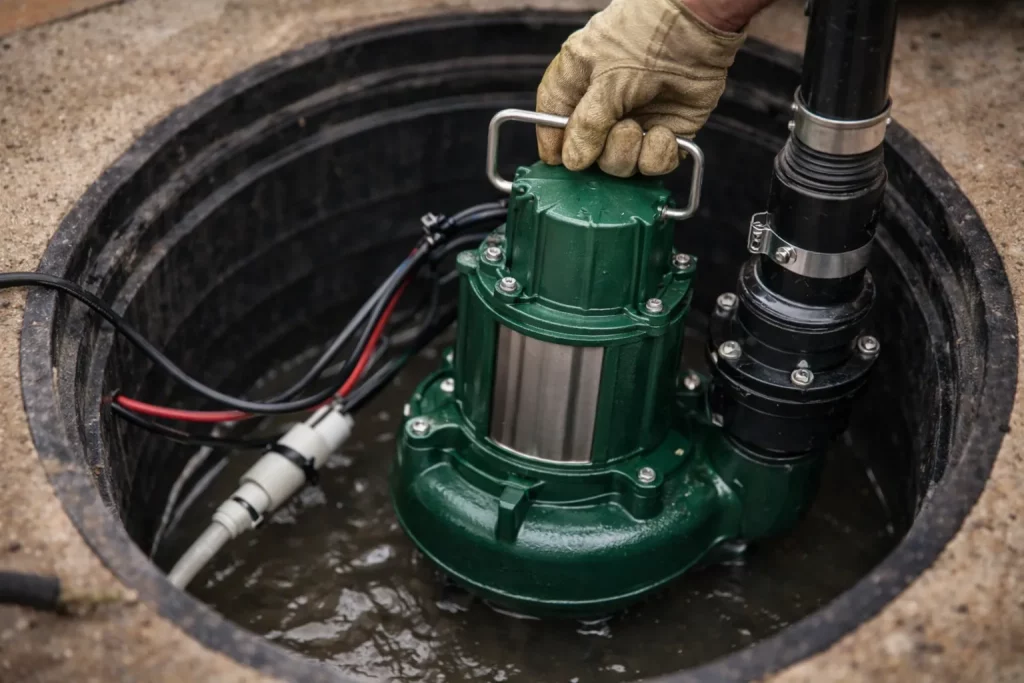
Sewage pumps are mostly submersible pumps designed to move waste water from a low area, such as the basement, to a septic tank or a sewer main. A sewage ejector pump, in particular, is a type of sewage pump that’s used for raw sewage containing solids up to 2″ in diameter. It doesn’t have blades like the sewage grinder pump and is mostly used in residential applications.
When do I need to install a sewage ejector pump?
If your basement bathroom is below the level of the municipal main sewer line you can’t use gravity to move it there. A sewage ejector pump can easily push all of it through pipes that lead to the main line.
It’s also popular in homes that aren’t connected to the public sewer. The pump clears out the sewage from the house and into a septic tank where it’s allowed to settle.
The best sewage ejector pumps today
1. Zoeller M267 Waste Mate Sewage Pump
- Pros
- 5100 gph @ 10′
- Long lasting cast iron construction
- Highly reliable vertical switch
- Cons
- Integrated switch
The Zoeller M267 waste-mate sewage pump is perfect if you want a heavy duty pump from one of the most trusted brands in the industry. It’s a 1/2 HP all cast iron pump capable of moving up to 5100 gallons of septic waste per hour to a height of 10 feet. That’s more than enough capacity for average sized homes within a reasonable distance to the septic tank or leach field.
It has a 2″ discharge and it’s capable of passing up to the same size of solids normally found in sewage. The vertical float switch turns on and off at 12″ and 4″ respectively and provides a seamless automatic operation. It’s integrated though and it would be pretty hard to replace if it goes bad. It’s a minor disadvantage really. And the overwhelmingly positive reviews from users over the years tell that the Zoeller M267 is still the best sewage pump you can buy.
2. Liberty Pumps P382LE41
| Pros | Cons |
|---|---|
| 6000 gph @ 10′ | Expensive |
| Complete, easy to install package | |
| Easy access for float switch replacement | |
| High quality assembly |
If you want a pre-assembled sewage pump package, you may want to consider the Liberty P382LE41. It’s a sewage system that packs everything you need for a much easier installation. The corrosion resistant cast iron pump is a 4/10 HP beast that can easily move 6000 gallons per hour of sewage to a height of 10 feet. It has a cast iron construction and a tough polymer impeller for years of reliable service.
The basin is made with polyethylene capable of holding up to 41 gallons, the perfect size for the pump, with a shallow design that allows easy installation in difficult locations.
It has the QuickTree technology where you can easily access the float switch, in case it goes bust, without having to get your hands down the pit. The bottom also has an anti float collar that keeps the basin from moving when ground water fills up below and tries to displace it. The only drawback it has is the price, it has a premium price tag but for the quality and ease you get, I believe it’s totally worth it.
3. Acquaer SEC050T
| Pros | Cons |
|---|---|
| 2600 gph @ 10′ | Not as powerful as the others |
| Tethered float switch | |
| Durable cast iron construction | |
| Affordable |
The Acquaer SEC050T is an all cast iron automatic sewage pump that receives a lot of positive reviews and for good reason. Moving up to 2600 gallons of sewage per hour, this affordable sewage ejector pump is perfect for small to mid size families that don’t need the powerful models above. This is quite a reliable pump that can handle even solid waste up to 2 inches in diameter.
The only thing that’s keeping me from giving this a full mark is position of the tethered float switch. It’s placed quite high which means it won’t empty the lower the pit’s level as much I would like. But that’s just me nitpicking, if you want a reliable cast iron sewage pump for your home without breaking the bank, the Acquear SEC050T is totally worth giving a try.
4. Superior Pump 93501
| Pros | Cons |
|---|---|
| 3600 gph @ 10′ | Thermoplastic impeller |
| Perfect for small families | |
| Reliable tethered switch | |
| Easy on the budget |
Superior is well-known in the pumping industry for providing good quality pumps at affordable prices. Just like their other pumps, the Superior 93501 boasts an impressive package without a heavy price tag. This is a 1/2 HP submersible sewage pump with a flow rate of 3600 gph at 10 feet. Perfect for medium sized families.
The pump has a cast iron construction with a thermoplastic impeller that should last do well enough for a few years. The impeller could’ve been made with more durable materials but it’s not that big of a deal given the price point. As long as you’re careful with what you throw down the toilet, it should be fine.
5. ECO-FLO RSE50M
| Pros | Cons |
|---|---|
| 4,020 gph @ 10′ | Need to buy a separate switch for auto operation |
| You can use other types of switch | |
| Very long 20′ cord |
The ECO-FLO RSE50M, unlike other sewage pumps listed, is non-automatic. This means you have to manually turn it on and off. This might be your choice if you want to control the pump yourself or if you have a different switch in mind — say, a solid state LevelGuard switch. And with a 20′ long cord, you’re given all the flexibility you need.
The sewage pump itself is a 1/2 HP pump capable of moving 4020 gph of sewage. It has a cast iron housing and base and a nylon impeller.
The ECO-FLO RSE50M is the best sewage pump you can get if you want complete control of your system. Add to that its very low price and you have a pump you’ll come back to after the years.
Buyer’s Guide
Choosing the best sewage pump is just like choosing any other appliance for your home. You want it to have quality, good performance, great features, and easy installation procedure.
1. Build Quality
Before we consider everything else, we need to make sure it has a sturdy build quality with no obvious design flaws. Heavy duty sewage ejector pumps are rare and they’re even harder to find amidst all the choices but they’re totally worth every single effort finding.
Every part of it must be resistant to corrosion and build-up while being strong enough to resist impact and erosion. A durable cast iron body with stainless steel rotor and fasteners is a popular choice. Individual parts must also be made of materials suitable for their purpose.
2. Features
You need a pump that you know you can count on every single time.
The motor must have thermal overload protection that protects itself from damage and lubricated bearings that allow it to run as quietly as possible.
The switch, whether vertical or tether float, must be well designed for sewage application and help the pump do its job without any issues.
For the pump, it must be able to pass solids. This usually means having a vortex impeller designed to do just that.
3. Performance
We want a pump that performs, one that’s capable of pumping a lot of gallons per minute of waste water. But more than that, we want a pump that performs efficiently. This means it can move that same amount of sewage with less electricity.
Of course, there’s a limit to it, but a well-designed pump will get us closer to the ideal without sacrificing its lifespan.
4. Ease of Installation
Installation is the final consideration for choosing the best sewage pump. A pump that’s easy to install will definitely be helpful. The weight, dimensions, recommended basin size, cord length, discharge connection, and even the user’s manual are all considered in choosing a great pump.
Frequently Asked Questions
What if none of these pumps work for me?
If none of these sewage ejector pumps work for you, you may need a different type of sewage pump altogether. If you always experience clogging in your system, grinder pumps may be worth looking into. It’s a bit more expensive but it has blades that cuts down solids into pieces to avoid clogging. They’re best for homes with children and guests who have little regard for what’s thrown down the toilet.
How long do sewage pumps typically last?
A high quality sewage pump that’s properly sized and installed should last 5 to 10 years on average. This may vary depending on how often it needs to run and how you take care of it. That means checking if the check valve still works, the switch doesn’t stick, etc. They typically last longer than grinder pumps since they don’t have blades that dull with use.
Related Posts
Who this is for (and who it is not for)
This guide is for homeowners comparing sewage ejector pumps for basement bathrooms or any plumbing fixture located below the main sewer line. It is not for grinder-pump-specific applications, septic design work, or full plumbing system engineering.
How we chose these sewage ejector pumps
We compared manufacturer specifications, installation requirements, discharge performance, switch design, basin compatibility, and warranty/support information. We also reviewed common installation constraints such as discharge size, lift height, and solids-handling needs to narrow down practical options for residential use.
Sources and references
We recommend verifying current basin requirements, discharge sizing, solids-handling limits, and venting/installation details before buying. For the most accurate information, use current manufacturer product pages and manuals for the models you are comparing.